Get free quotes from expert witness services near you
Takes about a minute. Free, no obligation; providers reply to you directly.
I was sitting across from a defense attorney when she asked me the question that made me realize I had no idea what I was talking about: “If the video gets challenged, can you explain to the judge exactly why it’s authentic?”
I’d been prepping expert witnesses for depositions for three years at that point. I knew lighting, angles, camera specs—the technical stuff. But I’d never actually understood the legal framework that makes or breaks whether their testimony even gets in front of a jury. That conversation sent me down a months-long research spiral into Federal Rules of Evidence, Daubert standards, and case law that nobody in my circle was discussing over coffee.
Here’s what I found: expert witnesses can absolutely testify in court, but only if they clear a series of gatekeeping hurdles that most people don’t know exist.
The Short Version:Yes, expert witnesses testify in court regularly—but only after passing a judicial gatekeeping hearing where the judge verifies their credentials, methodology, and the reliability of their conclusions. Challenge the authentication or chain of custody, and even credentialed experts get excluded. Federal Rule 702 and Daubert standards set the bar.
Key Takeaways
- Expert witnesses qualify to testify based on three core requirements: genuine expertise, reliable methods, and direct relevance to the case
- Federal Rule 702 and the Daubert standard give judges gatekeeping power to exclude testimony that doesn’t meet strict reliability criteria
- Authentication and chain-of-custody procedures are non-negotiable—sloppy documentation tanks credibility before testimony even starts
- Pretrial hearings determine admissibility; opposing counsel will attack methodology, not just credentials
The Three-Part Gatekeeping Test Nobody Explains Upfront
Here’s the frustration: attorneys know the legal framework exists, but they rarely explain it clearly to the experts they hire. The result? Experts show up unprepared for the actual scrutiny they’ll face.
Under Federal Rule 702, a witness qualifies as an expert if the court determines it’s more likely than not that:[4]
- The expert’s specialized knowledge will help the jury understand evidence or determine a fact in issue
- Testimony is based on sufficient facts or data
- Testimony reflects the product of reliable principles and methods
- The expert’s opinion reflects reliable application of those principles to case facts
That sounds straightforward until you realize what “reliable” actually means in court. A cardiologist with 20 years of clinical experience can testify about cardiac trauma—that’s genuine expertise. But if she guesses about causation instead of walking through the specific medical evidence, opposing counsel will destroy that testimony during cross-examination.
Reality Check:Most experts think their credentials alone carry them through. Wrong. Federal judges since Daubert v. Merrell Dow Pharmaceuticals (1993) have been tasked with gatekeeping testimony—and they take it seriously. Your CV matters. Your methodology matters more.
The Pretrial Gatekeeping Hearing: Where Testimony Lives or Dies
Before any expert testifies in front of a jury, the judge typically holds a pretrial motions hearing to evaluate whether the expert’s qualifications and methods meet the bar.[1] This isn’t a casual conversation. Opposing counsel will challenge:
- Credentials: Is your expertise actually relevant to what you’re claiming?
- Methodology: Did you follow accepted standards in your field?
- Data sufficiency: Are your conclusions based on solid facts, or educated guesses?
- Reliable application: Did you actually apply your methods correctly to this case?
The Kumho Tire Co. v. Carmichael (1999) decision clarified that this gatekeeping function applies to all expert testimony, not just scientific testimony.[4] A forensic accountant can’t simply rely on “30 years of experience” without explaining how that experience leads to a specific conclusion and why it’s reliable.[4]
I’ll be honest—this is where most experts underestimate the stakes. The judge isn’t just checking boxes. They’re looking for whether you applied your expertise systematically or just gave an opinion that happens to favor whoever hired you.
Authentication and Chain of Custody: The Unsexy Part That Kills Cases
Here’s what most guides skip: admissibility standards for exhibits.
Under Rule 401 of the Federal Rules of Evidence, evidence is relevant—and therefore admissible—only if “it has any tendency to make a fact more or less probable than it would be without such evidence and the fact is of consequence in determining the action.”[5]
That’s the foundation. But for expert testimony involving physical or digital evidence, authentication becomes critical.
In specialized fields like audio forensics, expert witnesses don’t just opine—they verify:[2]
- Metadata integrity: timestamps, format conversions, potential tampering
- Waveform structure analysis: evidence of editing or alteration
- Chain of custody documentation: who handled the evidence, when, and how
If chain of custody is broken—if there’s a gap in who possessed the evidence between collection and your analysis—opposing counsel will argue the evidence was compromised. No authentication = no admissibility = your expert testimony becomes irrelevant.
| Authentication Element | What You Need | Common Failure Point |
|---|---|---|
| Chain of Custody | Written record of every person who handled evidence | Missing dates or handler signatures |
| Metadata Verification | Timestamps, file properties, format conversions | Assumptions instead of verification |
| Methodology Documentation | Step-by-step explanation of analysis process | Vague or incomplete lab notes |
| Reliability Standards | References to industry-accepted procedures | Relying solely on personal experience |
| Relevance to Case | Direct connection between evidence and disputed facts | Tangential or speculative conclusions |
Pro Tip:Before you write a single line of your expert report, get the chain of custody documentation in writing. If it’s incomplete, flag it immediately. Opposing counsel will exploit gaps—and they’ll use it to undermine your entire analysis, not just that one piece of evidence.
When Video Testimony Gets Challenged: Real-World Breakdown
The principles apply across cases, but video evidence has become a lightning rod. Here’s why:
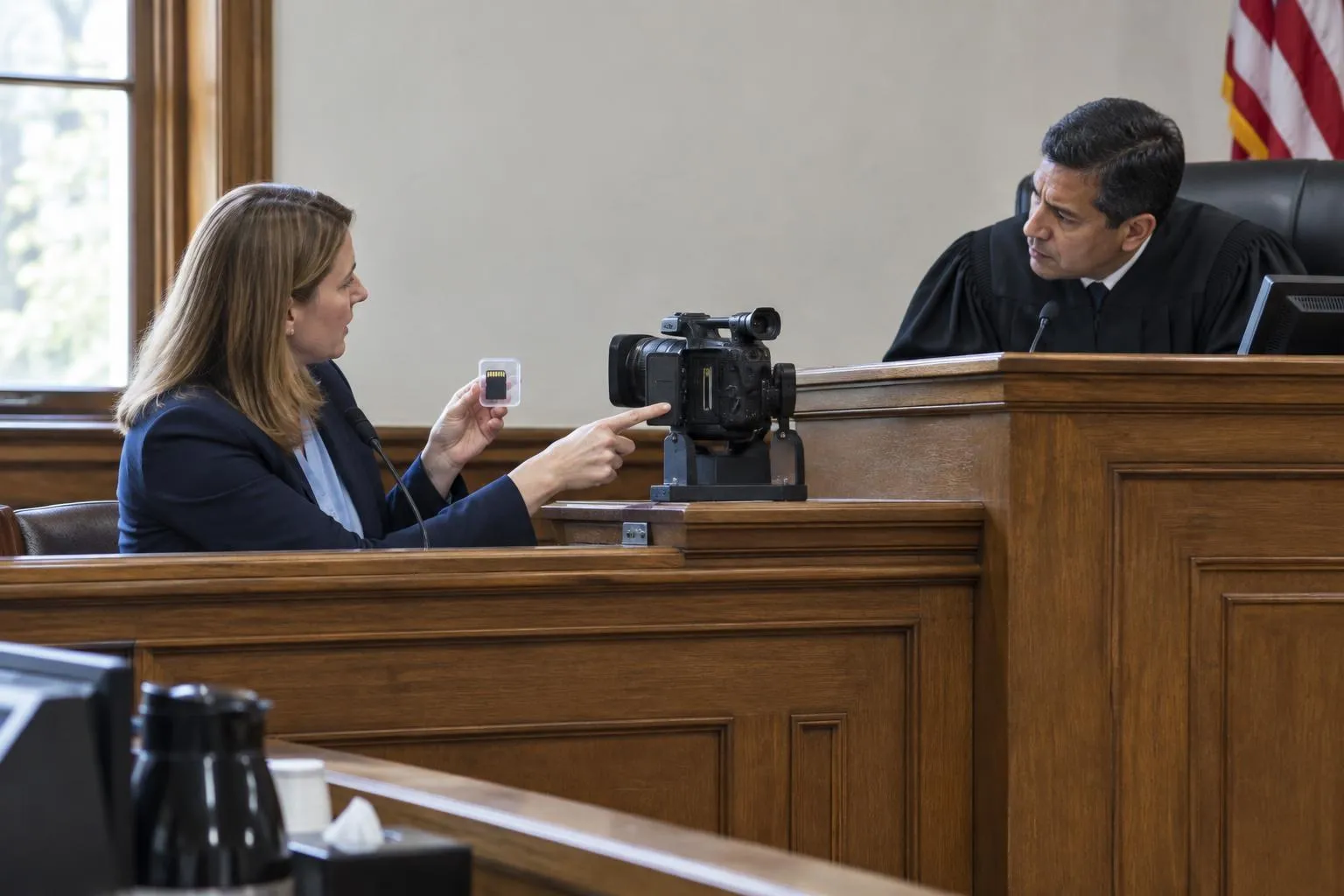
When opposing counsel challenges video authentication, they’re typically attacking:
- File integrity: Was the video edited? Are the timestamps accurate?
- Collection methodology: Was the camera calibrated? Was the recording done according to accepted forensic standards?
- Handling and storage: Who had access to the file? Could it have been altered?
In audio forensics cases, experts must testify not just about what they found, but how they verified it wasn’t compromised. If you can’t articulate your verification process step-by-step, the judge will exclude the testimony under Daubert standards before the jury ever hears it.
The Reality of Expert Witness Rates and Engagement
I should mention the practical side: expert witnesses typically charge $350–$1,000 per hour, with total case engagements ranging from $2,500 to $25,000 or more.[6] That rate structure reflects the gatekeeping burden—good experts spend significant time preparing testimony that withstands legal scrutiny, not just showing up with a credential and an opinion.
Practical Bottom Line
Expert witnesses absolutely can testify in court—but “can” is different from “will be admitted.” Here’s what you need to do:
-
Verify credentials first: Work with your attorney to confirm your expertise directly addresses the disputed facts. Vague relevance dies in gatekeeping hearings.
-
Document methodology obsessively: Every step of your analysis should be traceable to industry-accepted standards. Personal experience without systematic methodology gets excluded.
-
Protect chain of custody: Before you touch any evidence, confirm the documentation is airtight. Gaps are doors opposing counsel will drive through.
-
Prepare for the pretrial hearing: That’s where the real trial happens. Know your methodology cold, be ready to explain why it’s reliable, and anticipate challenges.
-
Link to experts in your field: The better expert witnesses maintain relationships with peers who can validate methodology and standards—that credibility matters when challenged.
For a deeper dive into how experts are selected and deployed, check out the Complete Guide to Expert Witnesses. For specific context around your industry, explore how authentication requirements apply in digital forensics or consult with an attorney in your jurisdiction.
The attorney who asked me about authentication? I followed up with her six months later. I’d learned enough by then to understand that authentication was the real story—not the video itself, but the documented proof that it hadn’t been tampered with. She hired me for three more cases after that. Turns out, knowing the legal framework actually matters.
Done reading? Get quotes from expert witnesses near you.
Takes about a minute. Free, no obligation; providers reply to you directly.
Popular cities: